
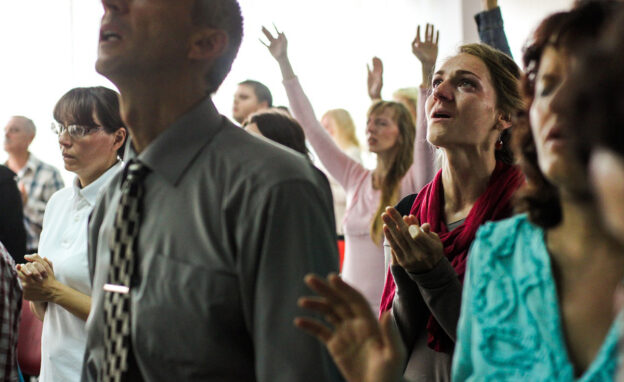
If you think back on your life about who has made the most positive impact on you, the chances are you will remember people who comforted and encouraged you through difficult times or to embrace your gifts. We remember them fondly because they saw through our faults, and saw through our own troubles, to see what we could achieve through persevering.
Paul also wanted to see the Thessalonian church comforted and encouraged. Therefore, after all Paul’s discussion of end time drama, Paul prayed for the Thessalonians that they would be comforted and established in God. In doing so, Paul importantly demonstrates the divinity of Jesus, God’s saving love which ensures that blessing, and his wish that they were comforted and encouraged to stand firm because of these realities.
Firstly, note who Paul prays to in this passage. “Now may our Lord Jesus Christ himself, and God our Father” (v.16). Praying to God our Father is not terribly scandalous. But Paul places “our Lord Jesus Christ” in first place in this prayer.
While some pop-fiction and nonsense scholarship suggests that the idea of Jesus being God with us was a later invention of the church, Paul’s emphasis on Jesus as both an object of prayer along with God the Father, and Jesus’ particular emphasis as first listed in the prayer say otherwise.
Further, the use of the term “Lord” with Jesus is a direct reference to the Greek translation of the Old Testament, which Paul frequently quoted in his letters, and used the same word in place of God’s covenantal name. Paul’s use of “Lord” in relation to Jesus made clear that he viewed Jesus as divine, within twenty years of Jesus’ death and resurrection.
Also, Paul spoke of “God our Father” not just “God the Father”. So while Paul was speaking of two of the three persons of the Triune God, he was also making a point. The Thessalonian believers were adopted sons and daughters of God the Father, and so he was their heavenly father too.
Secondly, notice the foundation that Paul places for his comfort and confidence expressed towards the Thessalonians. He prayed for God’s future help on the basis of God’s past help: “who loved us and gave us eternal comfort and good hope through grace” (v.16).
Paul reminded the Thessalonian church of God’s character and past dealings. Rather than solely emphasising God’s potential to help in the present and future, Paul pointed to God’s saving love expressed to them in the past. If God fulfilled his promises in the past, he will keep them in the present and future too.
Because while we were still sinners, God showed his love for us through Jesus dying for us (Romans 5:8) we now receive God’s eternal comfort. We do not enjoy forgiveness for our past sin but not our current sins; but forgiveness, comfort, welcome, and embrace for all our sins. Past, present and future.
This forgiveness is not based on anything that the Thessalonians could or had done, but on God’s eternal undeserved favour. Where once, they had no hope of salvation and peace with God, now they experienced the loving comfort of God, and hope of eternal blessings through Jesus.
It was on this basis that Paul prayed that their Lord Jesus Christ and God their Father would “comfort your hearts and establish them in every good work and word” (v.17). He wanted the external encouragements and comforts he had spoken of in verse sixteen applied in their inner lives.
Paul desired that God would encourage them through whatever difficulties they faced at that time, especially on the basis of God’s previous goodness to them expressed in their salvation. He also desired that God would encourage them in every work they did and word they spoke, in both good times and bad times.
This comfort and encouragement is available to us as believers today as well. God does not change, and nor does his goodness towards his people. As adopted children of God the Father, we too can call on God our Father and our Lord Jesus Christ, who is just as much God as he is also man, in good times and bad.
God’s goodness to us is the outpouring of his covenant love, his love which saves us. It is a love which is always shown to us, no matter how much we continue to sin. A love which God showed us by sending Jesus to pay the penalty for our sins, while we were still sinners. A love for us that never changes, but is always present, with the accompanying hope for the future.
That love is a comfort for us, because it is a constant no matter what change goes on around us, good or bad. We can rest in God’s salvation, which promises us that no matter how tough things get, things will get better. It gives us a basis to stand firm and continue in good works and good deeds, living for Christ in the face of trouble and uncertainty.
Because God’s love ensures we are comforted and established.