
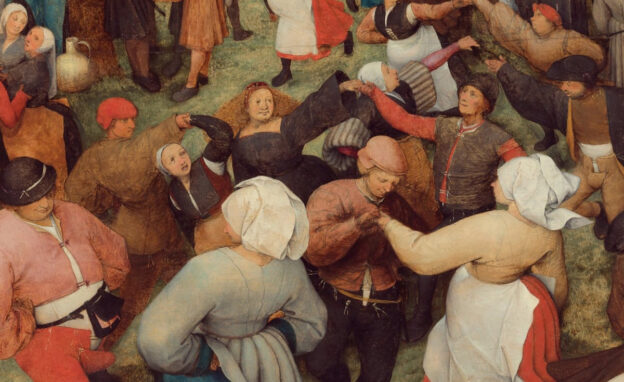
Everyone loves a good celebration. Whether it is celebrating a significant sporting victory or the opening of a new facility, you will always find people happy at the occasion. There will be everyone from notables, to politicians who will turn up to the opening of an envelope, to everyday people there, enjoying the event and hoping to get a glimpse (or a shot in camera).
When the rebuilt temple was completed in 516 BC, the Scriptures also record a celebration. While that celebration was more muted by comparison to the first temple, it was still a time of joy and celebration for God’s People to celebrate God’s goodness and renew themselves to the sacred purpose of serving and worshiping God faithfully. Every Sunday, we have the same privilege of celebrating God’s goodness through the building of his current-day temple, the Church. And likewise we can celebrate God’s goodness to our congregations on special occasions, too.
Since 586 BC when the Babylonians destroyed the first temple, there was no central place of worship for the Jewish people. In exile, the faithful remnant awaited God’s promises coming to fulfilment, when he would once again gather them back to the land and renew his covenant with them. Even as they returned at Cyrus’ command, the Jews faced decades of opposition and resistance from the surrounding nations as they attempted to complete the temple rebuild.
Now, finally, God’s rebuilt temple stood on the site of the old one, destroyed so many years ago. “And the people of Israel, the priests and the Levites, and the rest of the returned exiles, celebrated the dedication of this house of God with joy” (v.16). That day was a day to celebrate! There stood once again the temple, the place where God dwelt with his people, the central place of worship of the true and living God.
Of course, this was not the temple of old. The Ark of the Covenant, and much else, was gone. The elderly among them had wept as the foundations were laid, because they remembered the splendour of the first temple. And God’s people were significantly poorer than Solomon and united Israel at its greatest height.
The sacrifices were lesser too. At the dedication of Solomon’s temple, thousands of animals were sacrificed to God. At this temple’s dedication, “they offered … 100 bulls, 200 rams, 400 lambs, and as a sin offering for all Israel 12 male goats, according to the number of the tribes of Israel” (v.17). Yet we must remember that it was the quality of the offering, not the quantity, that was important. Better a smaller amount offered in faith by a disciplined, faithful remnant, than many thousands by faithless and unbelieving masses.
The Jews who returned and, encouraged by Haggai and Zechariah, dedicated this temple to God were faithful. They celebrated because they recognised God’s goodness, and they offered these sacrifices because they were renewing themselves to the sacred call of worshiping God as he commanded. At that time, that was through the administration of the Mosaic Covenant, with its blood sacrifices which pointed forward to the true atoning sacrifice of Jesus Christ on the Cross.
Alongside the sacrifices of animals and the goats as sin offerings for all the 12 tribes of Israel, the Jews demonstrated their commitment to renewing the covenantal relationship with God by reestablishing their worship “as it is written in the Book of Moses” (v.18). They “set the priests in their divisions and the Levites in their divisions, for the service of God at Jerusalem” (v.18).
This act demonstrated that the Jews were committed to keeping God’s commands, and keeping God’s worship, as God had revealed it in his Word, rather than allowing all sorts of novelties in or adopting practices from the Babylonians and Persians that seemed contemporvant. They sought faithfulness to God, and they sought it by seeking to faithfully adhere to God’s Word in their worship.
Today we do not have a physical temple at a central location, but God’s temple is his church. Wherever his church meets to worship God and give thanks for our salvation in and through Jesus Christ, God is present. Every Sunday, through deeds of salvation in the lives of people and through acts of sanctification in every believer’s life, God’s temple grows anew.
And so, every Sunday, we have the opportunity to join with the saints of the ages and give thanks to God for his goodness. We thank God for his goodness to us in saving us, in blessing us in many and varied ways, for defeating sin and death and accompanying us as we labour for him in the face of opposition and discouragement.
We can also give thanks on the special occasions of God’s goodness too. When he blesses us with new marriages, new births, new opportunities for his service, new leaders, new congregations, or perhaps even new buildings. All these things are special occasions to praise God for his goodness too.
God is good. It is good to give thanks to the Lord (Psalm 92:1). Celebrate!