
In recent months I have been introducing my children to a Christian broadcast music station in the car (it’s easier than swapping bluetooth connections in a Jap Import). My younger son has been grappling with the concept of the station being nationwide, and I have explained to him that they broadcast a radio signal for everyone to tune into in towns across the nation.
Last week we saw Jesus described prophetically as a shoot from the stump of Jesse. Not just another king, Isaiah 11 promised the universal righteous reign and rule of Jesus, who would defeat all the nations, will rule and reign in righteousness, banish the effects and power of sin, and remove the curse so we can dwell with God in peace. But Isaiah also tells us he would be a signal for the nations, reconciling them to God. Through Jesus, God is gathering and restoring God’s People and defeating his enemies.
Verse ten serves as a bridging verse between the first nine verses of the chapter, and those that follow. “In that day the root of Jesse, who shall stand as a signal for the peoples—of him shall the nations inquire, and his resting place shall be glorious” (v.10). Previous verses had promised that the Messiah’s arrival would remake the cosmic order, reversing the Fall and reconciling predator and prey.
Verse ten promised this reconciliation would also extend to the reconciliation of the nations to the Messiah of God in Christ, lifted up on the Cross to draw all people to himself. While individual gentiles had always joined themselves to God’s covenant people (for example, Rahab, Ruth, or Naaman), the messianic shoot would bring about the fulfilment of God’s promise to Abraham that in him all the nations would be blessed.
Paul quotes from Isaiah 11:10 in Romans 15:12, leaving out “in that day”, to emphasise that this day had arrived with Christ’s coming. It is not something still to come, but something that is here today.
Jesus’ birth would also bring about the gathering of the remnant and the restoration of unity amongst God’s People. Isaiah spoke of God “extend[ing] his hand” and regathering his people through a second exodus from “Assyria, from Egypt, from Pathros, from Cush, from Elam, from Shinar, from Hamath, and from the coastlands of the sea” (v.11). Those exiled from both the Northern and Southern kingdoms would be gathered from “the four corners of the earth” and the past divisions and conflict between the two kingdoms, which had run for hundreds of years since the time of Rehoboam, set aside (vv.12-13).
This was a figure of speech describing in categories familiar to God’s People in Isaiah’s day the gathering of God’s elect who confess faith in Jesus Christ their Messiah from all the nations of the earth. This fulfillment was only truly realised in the Church, God’s New Covenant gathering of people, which Christ instituted.
The gathering of God’s People from a second, end-time exodus, would also see the decisive defeat of the enemies of God’s People in the reign of the promised Messiah. The traditional enemies of Israel; Philistia, Edom, Moab, and Ammon, would be swept over by God’s People (v.14). God would destroy the traditional adversaries to Israel’s South (Egypt) and the North (Babylon) to enable the second exodus of his people from those places (v.15). To confirm this prophecy, God provides an image of a highway from Assyria for the remnant to return by, just as God led them out of Egypt (v.16). The implication of this image was that God would defeat Assyria, just as Egypt was in the Exodus.
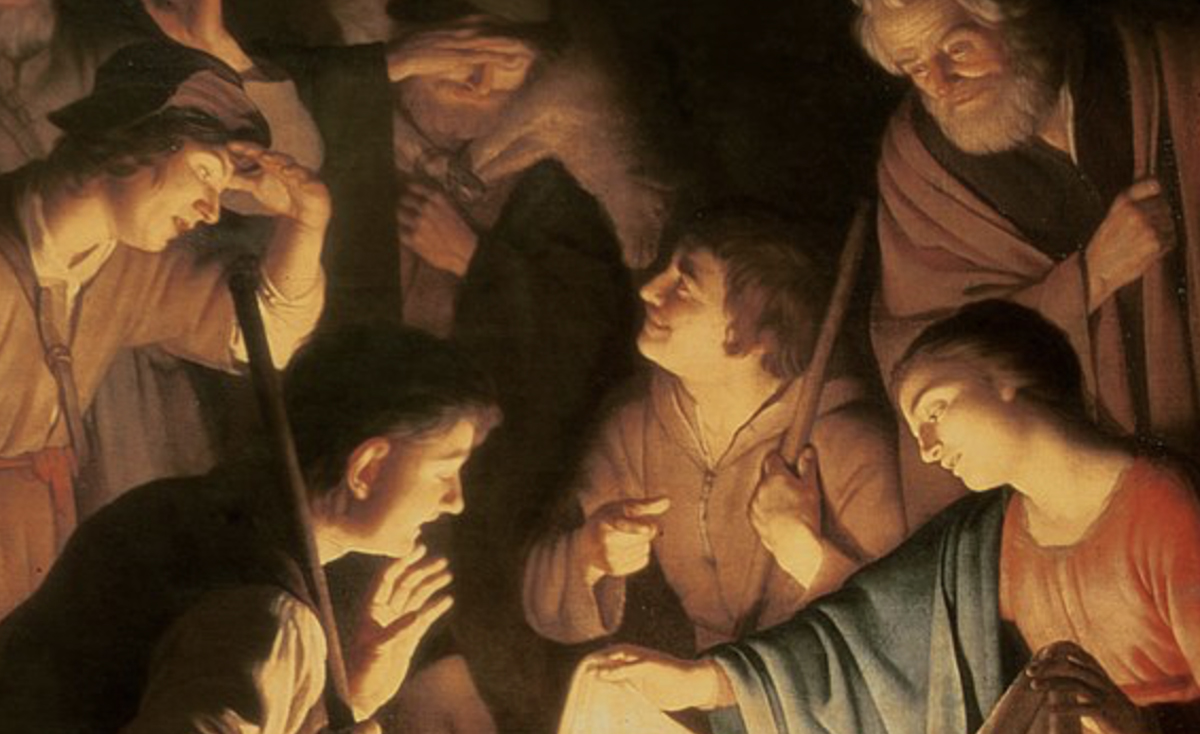
When we think of a poor baby born in a manger, in little Bethlehem, all of this seems so far off. Yet the wise men from the East recognised that baby Jesus was no ordinary child, and brought gifts to prove it.
Jesus’ birth is not just a story of presents and angels singing in the sky, it is the arrival of the Messiah, God’s signal to the nations, that they too could retune their radios from the static of sin to embrace the frequency of reconciliation to God.
Jesus was God fulfilling his promises made all the way back in the Garden, in the very curse which banished us. Through believing in Jesus, we inherit the blessing promised to the nations through Abraham. We are liberated from the ever-present enemies of sin and death, far more terrible enemies than historic Israel’s enemies to its north or the most evil of enemies today. One day, every enemy will be finally placed under Jesus’ feet.
This is not a promise which is a far off, currently unrealised hope. It is something which Paul confidently believed is happening now. “In that day” is not in the future, it is today. “In that day” is now, because in a little back-country town, the Eternal Word was born a little baby boy to defeat sin and death, and be a signal for the nations. Tune your hearts to hear this Christmas.